Research Project
Development of Adolescents’ Metacognitive Control: Effects of Individual and Social Factors on Short-Term Fluctuations and Long-Term Developmen
This project is funded by the Swiss National Science Foundation (SNSF) Starting Grant and is led by Prof. Dr. Mariëtte van Loon, who since July 2026 is based at the Department of Human Development, University of Basel. The project remains affiliated with the University of Zurich until 2028.
About the Project
This project investigates metacognitive monitoring processes, that is, the judgments adolescents make about how well they know something, and metacognitive control processes, that is, the decisions they take to regulate and improve their learning.
By monitoring and controlling their own cognition, adolescents can regulate and optimise how they learn and think. Metacognition continues to develop substantially during adolescence, a developmental period characterised by increasing autonomy and changing social contexts. However, there are pronounced individual differences in how effectively these skills develop.
The project aims to better understand metacognitive processes in adolescence, their short-term variability, and their long-term development. In addition, it examines why some adolescents develop these skills more effectively than others, with a specific focus on individual and social factors.
Specifically, the project addresses the following questions:
- How do metacognitive monitoring and control processes develop during adolescence?
- How do these processes fluctuate in the short term within individuals?
- How can metacognitive monitoring and control be reliably measured in adolescents?
- How are metacognitive skills related to learning performance in school?
- How do individual differences, including cognitive abilities, relate to metacognitive development?
- How do social contexts, such as classroom and peer environments, influence metacognitive processes?
- How can we identify adolescents at risk of low metacognitive skills?
- How can metacognition be effectively supported and improved?
To address these questions, the project uses on-task measures of metacognition and longitudinal research designs. Data are collected in collaboration with several schools across different cantons in Switzerland. Schools are visited repeatedly over time, allowing us to study both short-term fluctuations and long-term developmental trajectories of metacognitive skills in ecologically valid learning contexts.
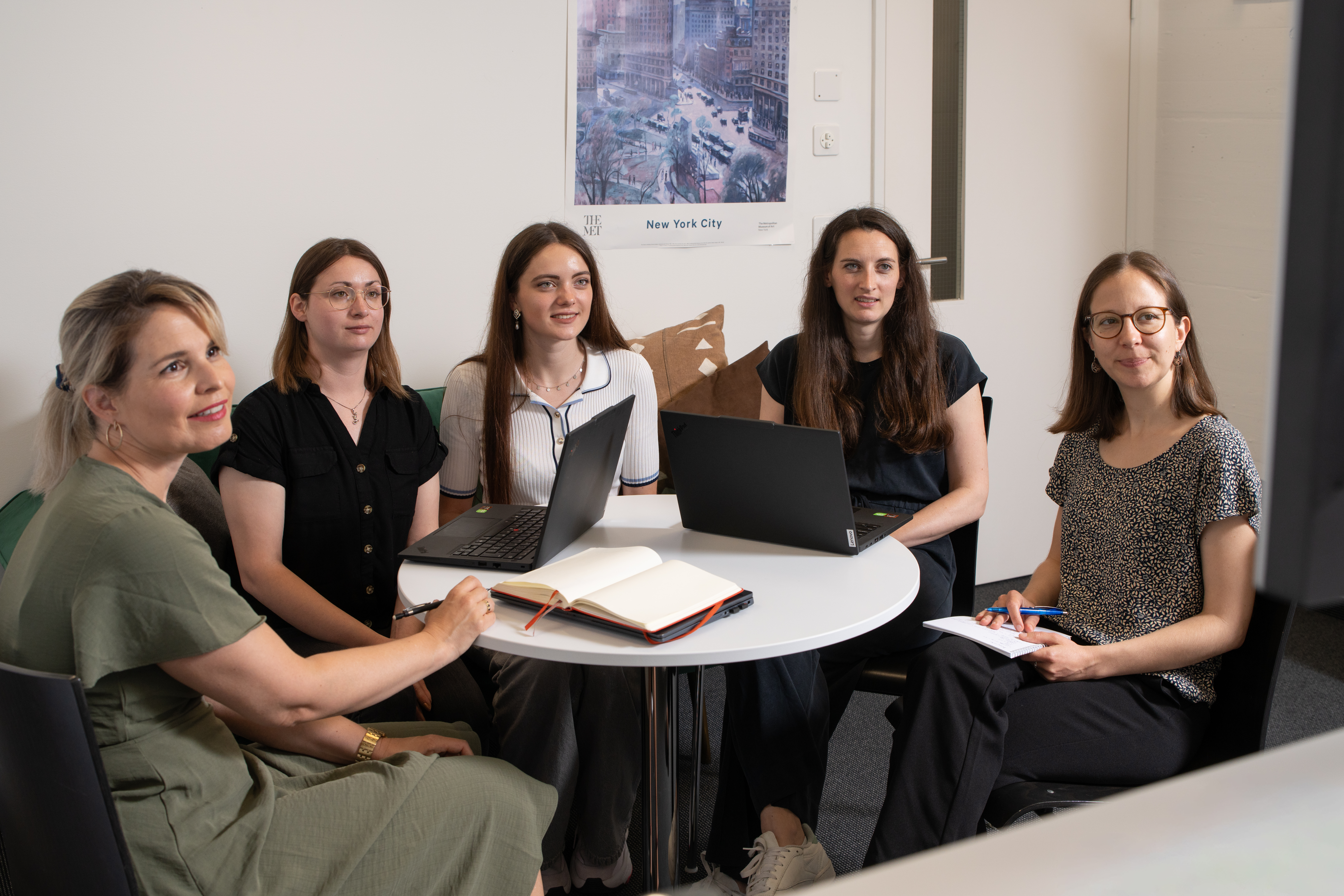
The Metacognitive Development Team, photo taken May 2026